Same genre, different rules: comparing two boards
Board rules · published · checked · 7 min read
Two titles from the same shelf can look identical in the store screenshots and play quite differently. The differences are rarely in the art. They are in how a level ends, what a special piece does and what happens to leftover moves.
Four rules that differ between titles
1. How a level ends
Some boards end the moment the goal is met, banking whatever is left. Others run a finishing sequence that converts leftover moves into effects on the board, which can matter for a score target. Whether leftovers are worth anything decides if you should rush the goal or set up first.
2. What a colour clearer does with a special
Covered in more depth in our guide to special pieces: in some titles the pairing converts every piece of that colour into the special, in others it simply removes the colour and fires the special once. Same visual, very different result.
3. Whether the board refills fairly
Refills are random in all of these games, but the constraints differ. Some boards avoid creating an immediate match on refill; others allow it, which is what produces the long free cascades players notice.
4. Obstacle interaction
Whether an obstacle is damaged by an adjacent match, only by a direct match, or only by a special is the single most important difference between two boards, and it is almost never stated in the game.
Why studio matters more than theme
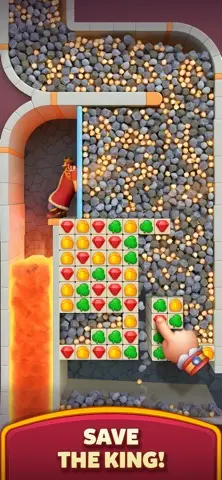
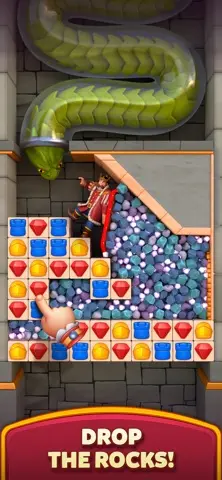
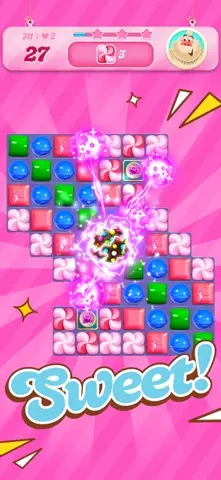
A fruit theme and a candy theme tell you nothing about the rules. The studio does. Royal Match and Royal Kingdom share conventions because Dream Games built both. Candy Crush Saga and Candy Crush Soda Saga share conventions for the same reason. Homescapes and Fishdom sit together for the same reason again. When you pick up a new title, the useful question is who made it, not what it looks like.
Five minutes well spent: on the first ten levels of a new game, deliberately try an adjacent match against an obstacle, and a special against another special. Both answers will hold for the rest of that title.
What the store page can and cannot tell you
The listing tells you the studio, the update cadence, the age rating and whether the game carries ads. It does not tell you any of the four rules above. That gap is what these guides are for.
Short version
- Rules follow the studio, not the theme.
- Check how levels end, how specials pair, how obstacles take damage.
- Test the two key interactions in the first ten levels.
- Do not assume the store screenshots imply anything about the rules.
Royal Kingdom on Google Playon the App Store
Both links open the developer's official listing. What a purchase costs, and whether one exists at all, is shown there and can change.